
Introduction
The rotary evaporator is an indispensable apparatus in synthetic chemistry and purification laboratories, where it is utilized on a daily basis. A typical application is in preparative chromatography, where collected fractions corresponding to the target analyte’s peak must be concentrated to remove the solvent and isolate the product, often in a solid state. This process is commonly achieved through rotary evaporation to eliminate the organic solvent. In cases where the solution contains water, a subsequent lyophilization (freeze-drying) step is often required. The following text provides a comprehensive summary of the structure, principle, operational procedures, and necessary precautions for using a rotary evaporator.
Structure and Principle
Structure:
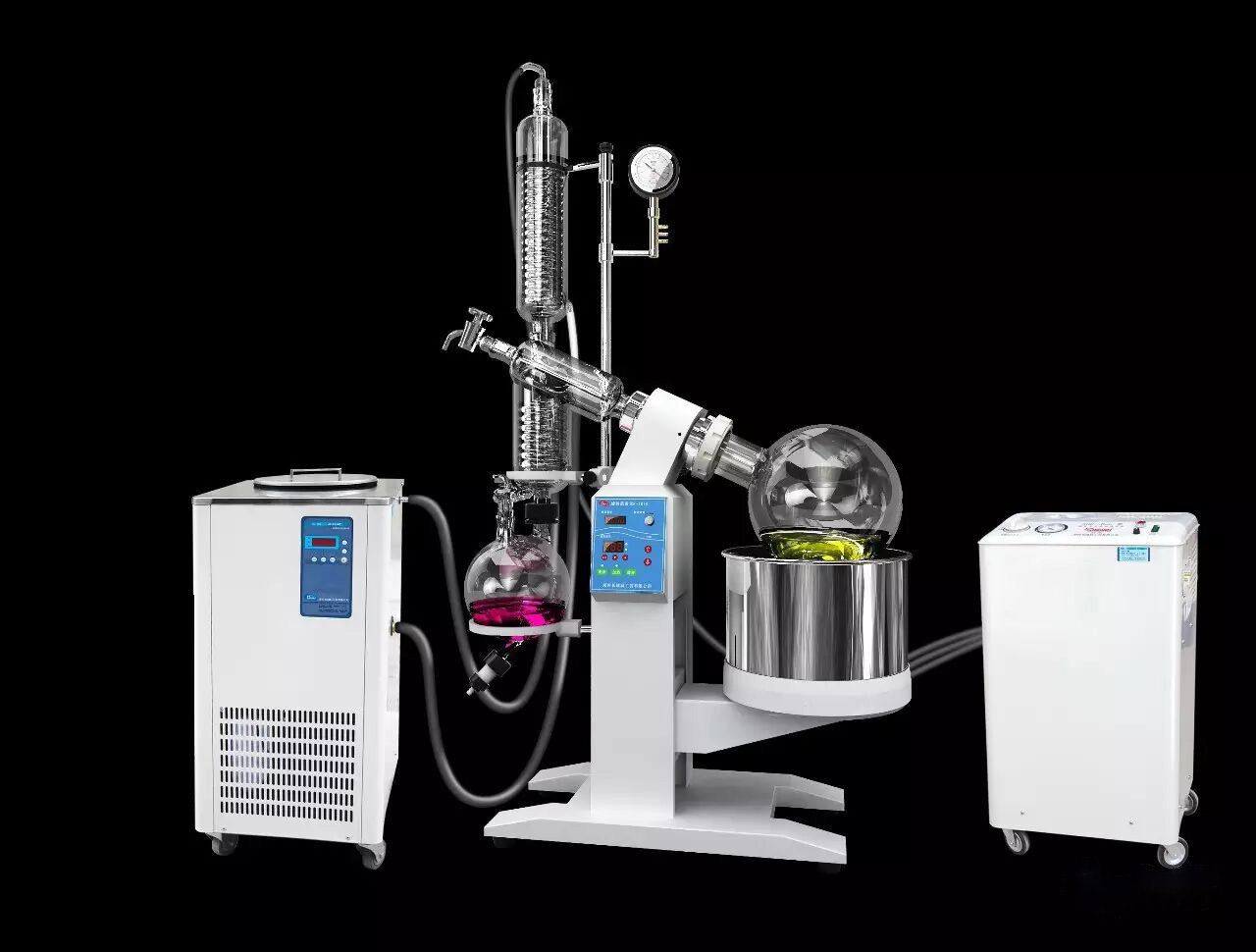
The core components of a rotary evaporator are as follows: The evaporating flask is a round-bottom flask equipped with a standard ground glass joint. It is connected via a reflux condenser (often of a serpentine or coil design) to a vacuum pump. The other outlet of the condenser is connected to a receiving flask, also fitted with a ground glass joint, which serves to collect the condensed solvent. A stopcock is positioned between the condenser and the vacuum pump to seal the system or vent it to the atmosphere. Venting the system to atmospheric pressure allows for the removal of the evaporating or receiving flask for solvent transfer. Conversely, when the stopcock connects the system to the vacuum pump, the apparatus is maintained under reduced pressure. A thermostatic heating bath (typically a water bath) provides the requisite heat for distillation. The purpose of the flask’s rotation is to increase the surface area of the solvent, creating a thin film that significantly accelerates the rate of evaporation.
Principle:
The operating principle of a rotary evaporator is vacuum distillation. Under reduced pressure, the boiling point of a solvent is significantly lowered, allowing for efficient distillation at a moderate temperature. The continuous rotation of the evaporating flask further enhances this process. The primary application of this technique is the continuous distillation of large volumes of volatile solvents under reduced pressure. It is particularly effective for concentrating extraction liquors and distilling eluates from chromatographic separations, thereby facilitating the isolation and purification of reaction products.
Operating Procedures
Upon completion of the evaporation, first stop the rotation of the flask. Subsequently, vent the system to atmospheric pressure before removing the evaporating flask.
Activate the recirculating chiller, enabling both the cooling and circulation functions.
Power on the heating bath and adjust it to the desired temperature.
Once the condenser temperature has stabilized (typically below 0°C) and the heating bath has reached the setpoint, securely attach the evaporating flask and begin to evacuate the system by applying the vacuum.
Initiate the rotation of the flask.
For the initial 1-2 minutes, carefully monitor the system for any signs of bumping (violent, uncontrolled boiling). Should bumping occur, immediately vent the system, lower the bath temperature, and decrease the vacuum level (i.e., increase the system pressure). Normal operation can proceed once the vacuum is stable and no bumping is observed.
Precautions
- Before assembly, apply a thin layer of vacuum grease to all ground glass joints, sealing surfaces, and O-rings to ensure an airtight seal.
- Prior to commencing evaporation, the recirculating chiller must be activated. Only begin the evaporation process after the condenser temperature has fallen below 0°C. Failure to adhere to this may result in solvent vapors being drawn into the vacuum pump, which can impair the ultimate vacuum level and shorten the pump’s operational lifespan.
- The heating bath must be filled with water (or another appropriate heating fluid) before it is powered on. Dry heating is strictly prohibited.
- When evaporating solvents with low boiling points and low viscosity, which are prone to bumping, either gradually increase the bath temperature from a low initial setting or add boiling chips. Connecting a bump trap is also recommended.
- During operation, the standard sequence is to first reduce the system pressure (apply vacuum) and then initiate the rotation of the flask. At the conclusion of the process, the sequence must be reversed: first, stop the rotation, and then vent the system to atmospheric pressure. This order prevents the flask from detaching due to rotational forces while the system is being vented.
- Handle all glass components with care. Ensure they are thoroughly cleaned and dried before assembly.
- If an adequate vacuum level cannot be achieved, perform the following troubleshooting checks:
- Inspect all joints, connections, and interfaces to ensure they are properly sealed.
- Check if organic solvent has been aspirated into the vacuum pump. For an oil-based pump, the oil may be contaminated and require changing. For a water aspirator, the water may have warmed or become saturated with solvent and need replacement.
- Examine all sealing rings and gaskets for damage, wear, or degradation.
- Verify that the vacuum seal between the rotating main shaft and the seal assembly is properly lubricated with vacuum grease.
- Inspect the vacuum pump and all associated tubing for any leaks.
- Carefully examine all glassware for any cracks, chips, or fractures that could compromise the vacuum.